|

Coil
Handling / Press Feeding —
Part Production
Enters the Comfort Zone

New
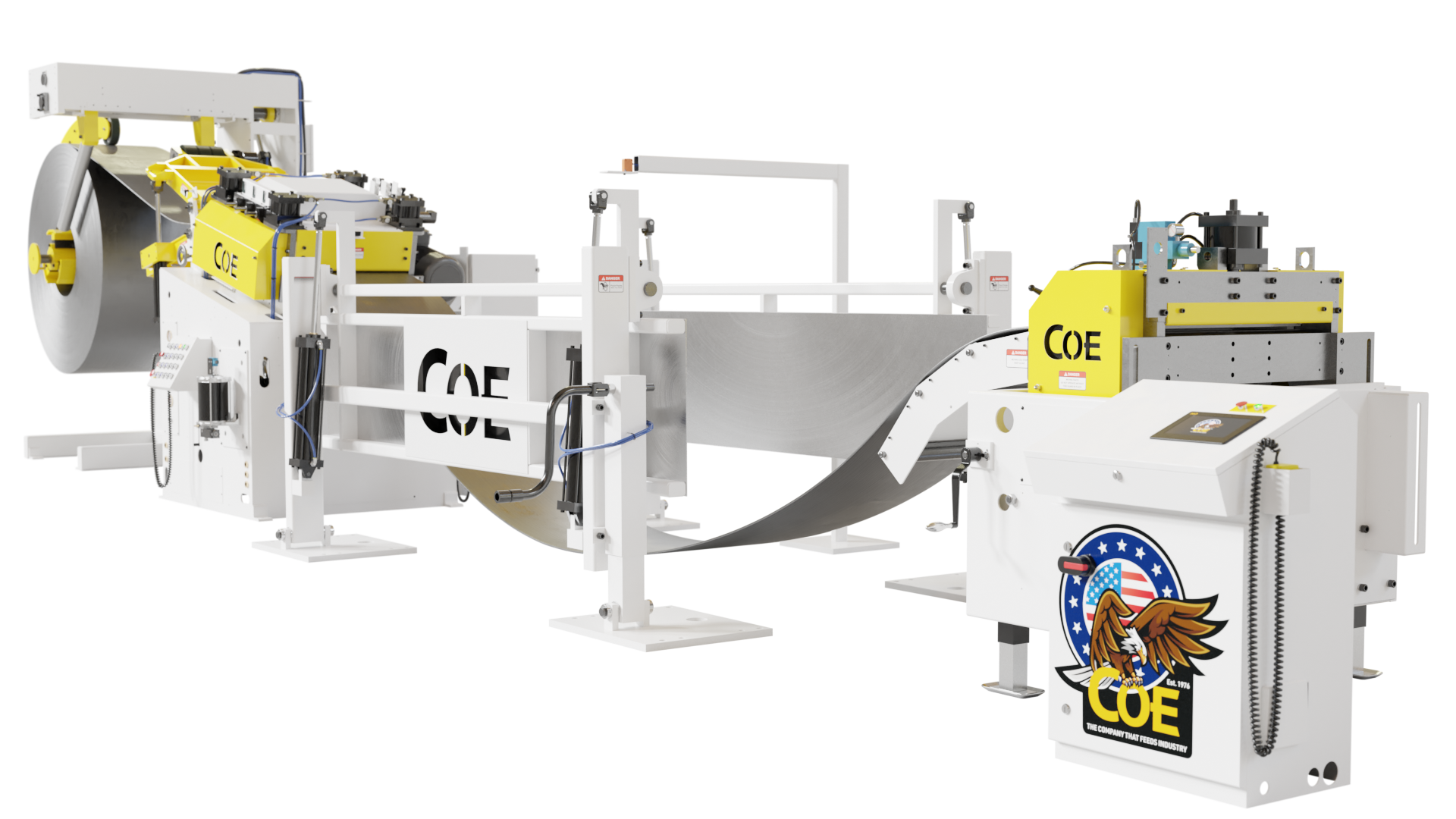
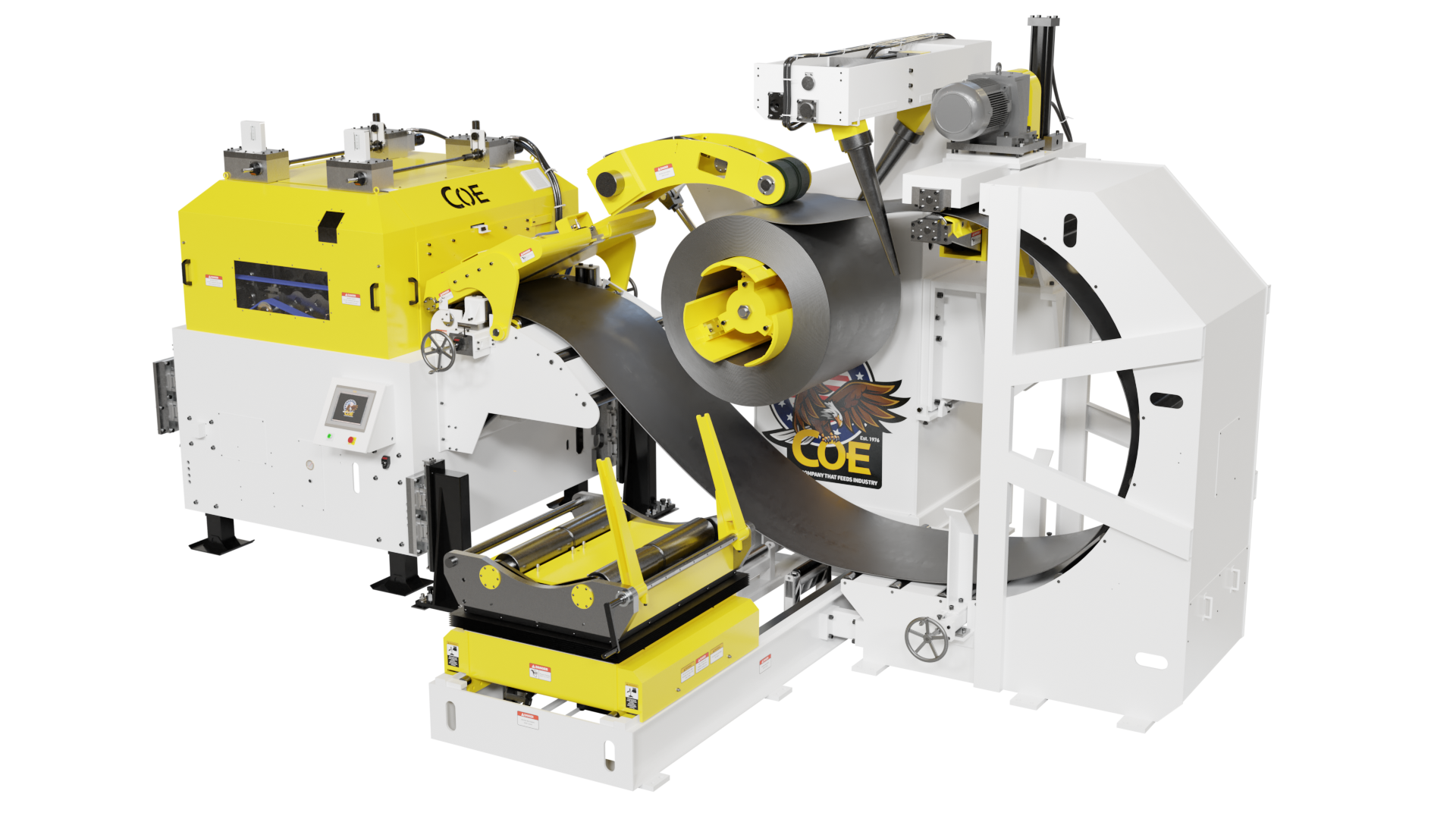
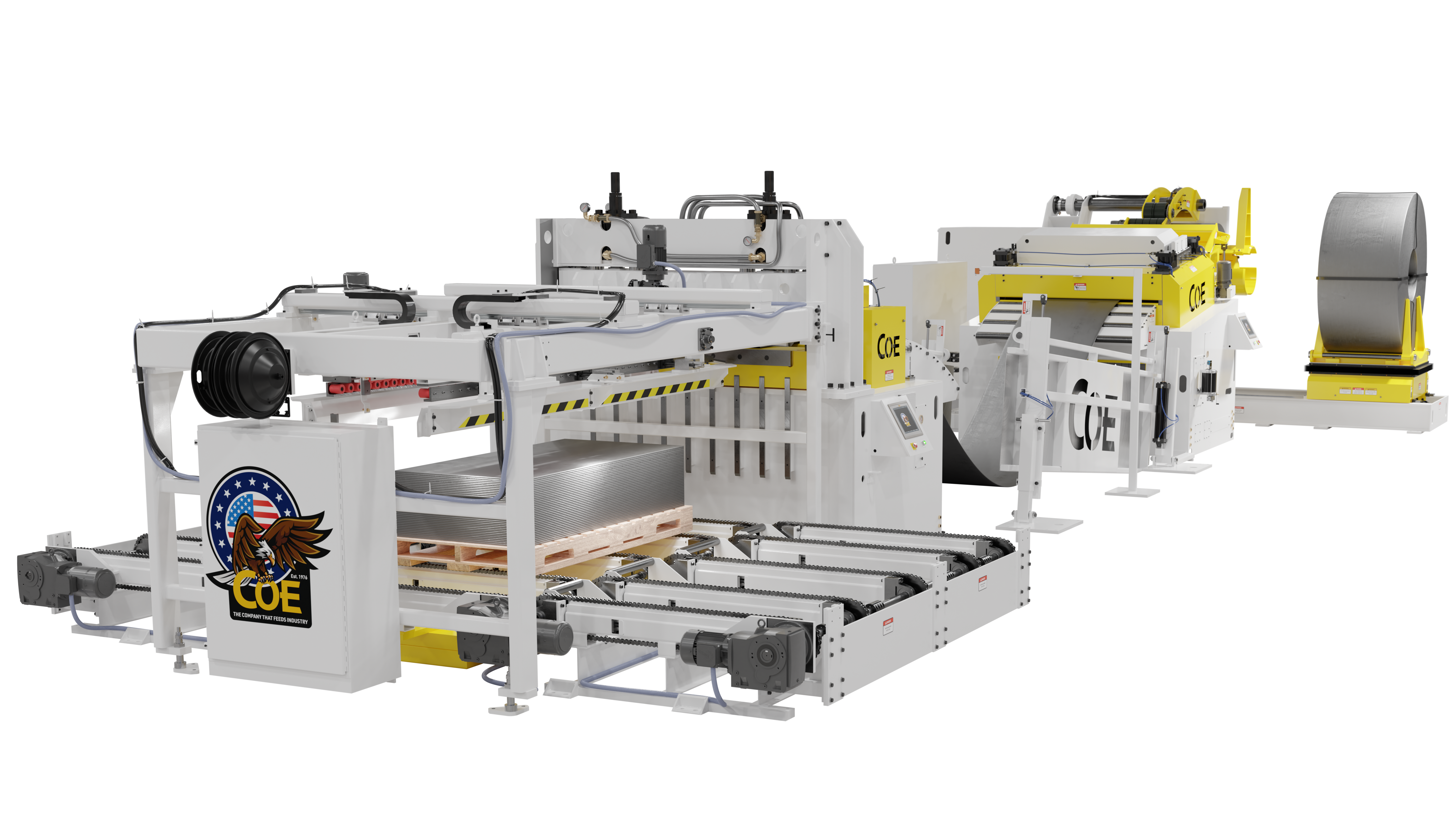
coil processing/stamping equipment - a coil handling and servo pass press
feeding system, an in-press transfer system, and a 400-ton press increases
productivity, maintains accuracy, and keeps part scrap to a minimum at
Armstrong Air Conditioning.
Since the
1940's, Armstrong Air Conditioning (Bellevue, OH) has been keeping people
comfortable. Its air-conditioning units keep consumers cool in the summer
and its furnaces spread warmth in the winter.
But Armstrong
found itself in an enviable, yet uncomfortable, situation - an increase
in product demand, meaning increased production of stamped parts with
high productivity levels and precision. At the time, the company didn't
have existing stamping and coil feeding equipment capable of meeting the
demands.
In the
last several years, to increase productivity, Armstrong began to upgrade
stamping equipment by integrating new coil feeding technology. The OEM
had several older coil air feed systems on stamping presses (used for
certain jobs) that did not provide the accuracy the company demanded.
A
particular furnace part, which experienced significant growth, presented
the first challenge. A 19.5-in x 20-in (49.5-cm x
50.8-cm) part is stamped in a mirror-image configuration out of 0.034-in
(0.086-cm) stainless steel from a coil width of 22.5 in (57.15 cm).
Armstrong
needed to increase the number of parts produced, maintain high productivity
and precision, and keep part scrap to a minimum. Initially, the OEM didn't
have the inside capacity to run it in house. The part was originally produced
by an outside vendor using operators to feed parts between three dies
in multiple presses.
Armstrong
elected to produce the part in-house, by purchasing a press and automating
the process using Coe Press Equipment's coil handling and servo press
feeding systems, an HMS in-press transfer system, and a 400-ton press
from Clearing Niagara.
Bill Hughes,
manufacturing engineer for Armstrong, was assigned
to the part's production. "I looked at different press feed companies
and involved the operators," explains Mr. Hughes "If the operators
aren't satisfied and don't like the equipment because it's not "operator
friendly", they're not going to take advantage of its capabilities."
Mr. Hughes
said that input from the operators revealed a
preference for Coe equipment because it is American made and reportedly
easy to use. "Our operators had never seen a computer controlled
panel and never operated a press of this type. At first they were some-what
intimidated by the equipment, but eventually felt very confident that
they could learn to operate it," he says. Mr. Hughes believes that
the Coe equipment is of high quality and will serve his company for many
years. "It's not something that we're going to replace in 5 years,"
he says. "I appreciate the fact that it is user-friendly."
Armstrong
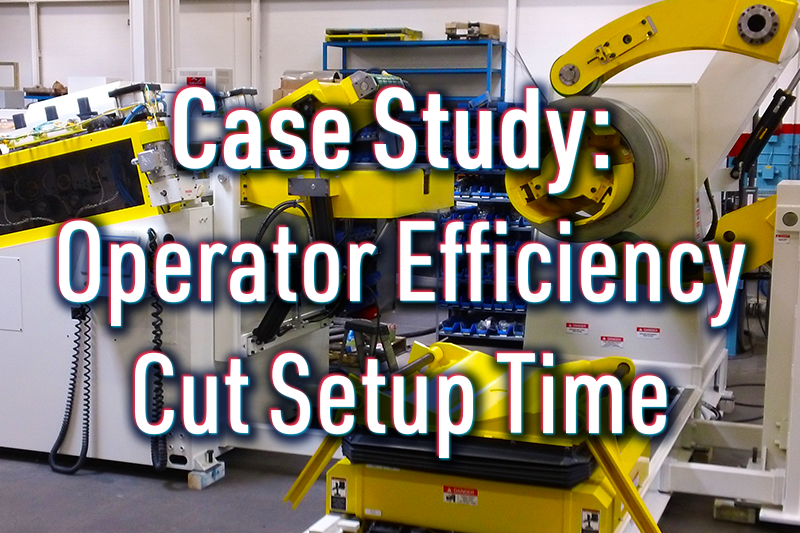
is using a 400-ton (89,600-lb) press with a 60-in x 120-in (152.4-cm x
304.8-cm) bolster area. The line has a Coe model CTR-PO-20048 pull-off
coil reel, model CTPF-PO-350-48 powered straightener, and model CPRF-448
servo roll feed. Up to a 48-in (121.92-cm) wide coil can be handled with
a thickness of 0.090 in (0.229 cm) at 48 in (121.92 cm) wide on this system.
"To
run various batch sizes we must get dies in and out quickly,"
says Mr. Hughes. "To do this efficiently, we selected the peeler/threader/hold-down
option on the Coe equipment, as well use other optional equipment available
for the Coe line that would help reduce set up times." He continues,
"This line is capable of handling up to a 20,000-lb, 48-in (121.92-cm)
wide coil, but we're not currently running anything that wide. On the
other end, we're
running a job that's about 1 1/2-in (3.81-cm) wide. It's a narrow part,
but it's very long, so we're using a press this size. We were not sure
how well the 48-in (121.92-cm) Coe line would handle a narrow coil like
that, but the part runs perfectly."
Other part
materials that run on this press and feed line include
aluminized steel, cold-rolled steel, and galvanized steel with
thickness ranging from 0.028 in to 0.061 in (0.071 cm to 0.155 cm).
"We
wanted to find people that we could partner with for the long
haul," he says. "We bought two Coe feed lines, and we know several
years from now, we're going to buy more."
Back
to Top
|